
Choosing the best outdoor signs begins with the place they must work: a busy road, a shaded entrance, or a storefront partly hidden by parked cars. Signs Outside need to be readable quickly, withstand local weather, and fit the character of the business. A polished design cannot compensate for lettering that disappears at dusk.
The value is practical. In a 2012 survey commissioned by FedEx Office, 76% of respondents said they had entered a store they had never visited because of its signs. The same survey found that 68% had purchased a product or service because a sign caught their attention. These findings suggest that signage can influence discovery and buying decisions. They are survey results, not a promise of sales for every location. That distinction matters.
This guide considers how to match sign type, size, materials, lighting, and placement to real site conditions. Think about a driver approaching at speed, a pedestrian reading from the sidewalk, or a customer searching for the entrance after dark. Small details count. Check sightlines, contrast, expected maintenance, and applicable local requirements before ordering. A useful sign is not always the largest or brightest one; sometimes the best choice is simply easier to read. And a first draft may miss something. Review it from the street, then revise.
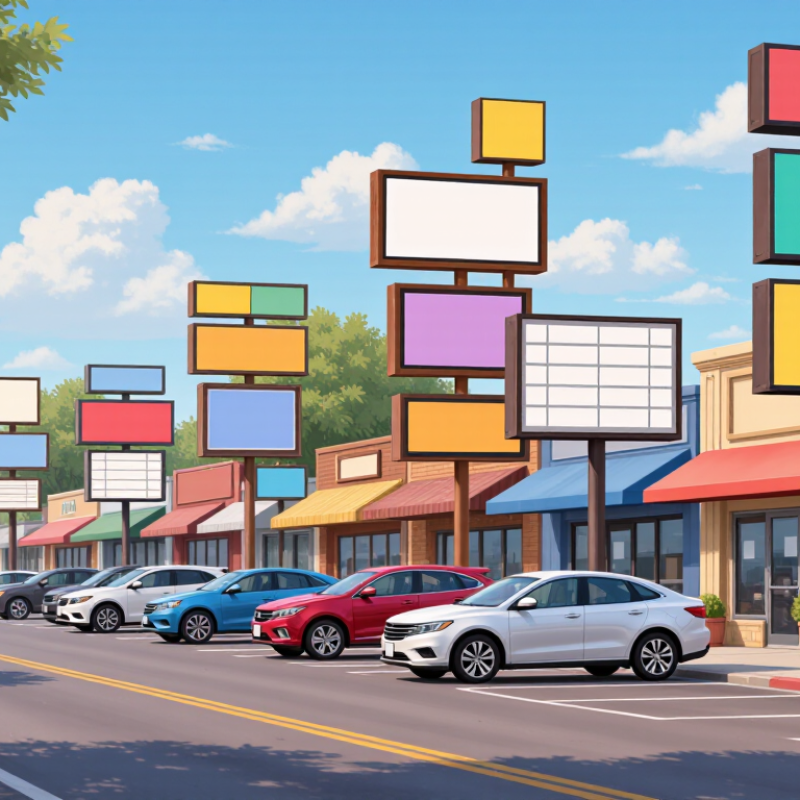
Before choosing a design, decide what the sign must do: help drivers find your entrance, guide pedestrians, or announce a service. One sign rarely does every job well. For a roadside location, prioritize quick recognition from a moving vehicle; near a doorway, clear directions may matter more than a large logo. Keep the main message brief enough to understand at a glance. Pause here. What should a passerby do next?
Location shapes the sign’s size, height, contrast, and lighting needs. Stand where customers approach and check what they can actually see. A tree, parked van, glare, or competing storefront can hide even carefully designed lettering. For example, a sign above a recessed entrance may be invisible from the sidewalk, while a projecting sign can be easier to spot from both directions. Check sightlines during different hours, not just at midday. That detail is easy to miss.
The Sign Research Foundation’s 2012 Economic Value of On-Premise Signs study reported that 60% of surveyed businesses saw sales rise after installing or updating signs, with an average increase of 10%. That finding supports treating signage as a business tool, not merely decoration; it does not guarantee the same result for every site. Record current foot traffic or customer inquiries before changing a sign, then compare results afterward. Even a thoughtful plan can be wrong. Recheck it from a customer’s viewpoint.
Use this common planning rule of thumb—about 1 inch of letter height for every 10 feet of viewing distance—to estimate letter size. For example, a sign viewed from 100 feet away would use letters about 10 inches tall. Treat these figures as a starting point; traffic speed, lighting, contrast, and viewing angle also affect readability.
Before choosing an outdoor sign, check the rules that apply to its exact location. Requirements can differ by town, road type, building, and sign dimensions. Contact the local planning or building office, and ask about permits, height limits, lighting, setbacks, and installation methods. Get the guidance in writing when possible. Small details matter.
Also check property rules. A landlord, business association, or shared-site manager may have separate standards for sign size, colors, or placement. A design that meets local requirements may still need their approval. Don’t rely on an old sign nearby as proof; rules may have changed.
Walk the site at different times of day. Note passing traffic, pedestrian sightlines, shade, glare, and nearby trees. Check whether parked vehicles could block the message. Look for wind exposure, drainage, and the condition of the ground where posts might go. A site sketch can still miss a stubborn tree. Measure twice.
If the area is exposed to strong gusts or heavy rain, ask a qualified installer about suitable materials and secure mounting. I once thought a clear roadside view was enough; a low branch changed that assumption. Recheck the view from the actual approach, not just from the doorway.
A flat panel sign works well for building walls, fences, and roadside frames, while a banner suits temporary promotions or events. For a permanent storefront, dimensional letters can create depth, but their edges and mounting points need careful sealing. Keep it visible. Choose a format that fits the viewing distance and available space, not just the one that looks impressive up close.
Material choice affects how a sign ages outdoors. Aluminum resists rust and stays relatively light, making it useful in wet or windy locations. Aluminum composite panels offer a smooth face, though damaged edges can let moisture in. Acrylic gives crisp color and a polished appearance, but impact or temperature swings may cause cracking. Wood has warmth and character. It can warp. Protective coatings help, but they require upkeep, especially where rain collects or sunlight is strong.
Compare the local conditions before ordering: hours of direct sun, driving rain, frost, and wind exposure all matter. UV-resistant inks and laminates can slow fading, while sealed fasteners and drainage gaps help prevent trapped water. Ask how the sign will be mounted, too; a durable panel can still fail if it flexes against its supports. Request a material sample and inspect it in daylight. I’ve seen color choices look different outdoors than they did under showroom lights, so that small check is worth the effort.
| Sign Type | Typical Material | Visibility and Best Use | Weather Resistance | Maintenance Considerations | Good Choice When… |
|---|---|---|---|---|---|
| Post-and-panel sign | Aluminum panel on steel, aluminum, or treated-wood posts | Clear roadside or entrance identification; suitable for names, directions, and service information. | Aluminum resists rust, while steel supports need a suitable protective finish. Treated wood can weather and may need periodic upkeep. | Check fasteners, post stability, protective coatings, and any printed or applied graphics. | You need a freestanding sign with good visibility at a property entrance or along a driveway. |
| Wall-mounted sign | Aluminum, acrylic, or exterior-grade sign panel with weather-resistant graphics | Useful for identifying a building, storefront, or entrance; visibility depends on placement and viewing distance. | Aluminum handles outdoor exposure well. Acrylic can be suitable outdoors, but mounting and exposure should be considered, especially in cold conditions or direct impact areas. | Clean the face with a non-abrasive cleaner and inspect mounting hardware and seals. | You want to use an existing exterior wall and have a clear, visible mounting location. |
| Monument sign | Aluminum or sign-grade panels with masonry, concrete, or other structural supports | Low-profile identification near an entrance; offers room for a name, address, or directional message. | Durability depends on the full structure, drainage, foundation, panel, and finish. Corrosion-resistant panels help reduce weather-related deterioration. | Inspect the base, drainage, surface finish, and connections; clean surfaces as needed. | You need a substantial, permanent-looking entrance sign that can be read by approaching visitors. |
| Illuminated cabinet sign | Aluminum cabinet with a translucent acrylic or polycarbonate face | Good for storefront identification in low light; the lit face can improve visibility after dark. | Outdoor suitability depends on weather-sealed construction, drainage, electrical components, and correct installation. | Check the face, seals, wiring, and lighting system; keep the sign clean and arrange electrical repairs safely. | Your sign needs to remain visible in the evening or in areas with limited ambient light. |
| Directional or parking sign | Aluminum panel with reflective or non-reflective outdoor-rated graphics | Communicates concise instructions at driveways, parking areas, and pedestrian routes. | Aluminum is a practical choice for rain and many outdoor environments. Reflective sheeting can improve visibility when illuminated by vehicle headlights. | Keep lettering unobstructed; check posts, brackets, and reflective surfaces for damage or fading. | Visitors need to find parking, entrances, exits, or specific areas quickly. |
| Temporary yard sign | Corrugated plastic sheet with a wire or lightweight metal stake | Lightweight and easy to move; suited to short-term notices and event directions. | Handles ordinary outdoor conditions for temporary use, but can bend, fade, or shift in strong wind or prolonged exposure. | Check that the stake is secure and remove or replace the sign when it becomes damaged or no longer needed. | You need a low-weight, temporary sign that can be installed and removed easily. |
| Hanging blade sign | Aluminum or steel frame with an exterior-grade panel or face | Projects from a building façade, helping pedestrians spot a business along a street. | Outdoor performance depends on corrosion-resistant hardware, secure wall attachment, and materials suited to local wind and weather exposure. | Inspect brackets and fixings regularly; check for movement, corrosion, or damage after severe weather. | Your storefront is on a pedestrian route and a wall-mounted sign may be difficult to see from the sidewalk. |
Outdoor signs have only a few seconds to make sense to someone passing by. Start with one message, such as your business name and the service people need. Keep the lettering large enough to read from the actual approach, not just from the sidewalk. Strong contrast helps: dark letters on a light field, or the reverse. A decorative typeface may suit your brand, but it can become hard to read at a distance. Test a full-size mockup from across the street. Then check it in sunlight and after dark.
A 2012 FedEx Office Small Business Signage Survey, conducted by Ketchum, found that 76% of respondents had entered a store they had never visited because of its signs. The survey also found that 68% had bought a product or service after a sign caught their eye. Those figures show the potential of signage, not a promise of sales. Brand fit matters, too: match the sign’s colors and tone to your existing storefront and materials, while protecting legibility. I have seen attractive layouts lose clarity when too many colors compete. That is easy to miss on a bright screen. Print the design, view it from the curb, and ask someone unfamiliar with the business what they can read first.
Set a total project budget before comparing materials or requesting quotes. Include the sign, design, permits where applicable, site preparation, delivery, and installation. Ask installers to list labor, equipment rental, and electrical work separately. A wall-mounted panel may need only secure hardware, while a tall roadside sign can require lifting equipment and a prepared base. Compare similar specifications, not just headline prices. Keep 10–15 percent aside for surprises, such as hidden wiring or a surface that needs repair. Leave room for surprises.
Arrange a site visit before approving the installation plan. Check visibility from the road or walkway, access for workers, and nearby trees that may block the sign later. Confirm who handles cleanup and who repairs damage if the mounting surface is affected. The cheapest quote may not include these details. Ask for clarification in writing.
Set aside money for upkeep, too. Dust, rain, sun, and passing vehicles can dull colors or loosen fittings over time. Schedule a visual check every few months, and inspect fasteners after severe weather. Clean with materials suitable for the sign’s finish; abrasive tools can leave scratches. Keep a record of repairs and dates. Your maintenance schedule may need adjusting after the first season, especially if the sign faces strong afternoon sun.
Give it one clear job: help drivers find an entrance, guide walkers, or announce a service. Keep the main message brief. One sign cannot do everything well.
Stand where customers approach and look for trees, parked vans, glare, or competing signs. Check at different times of day. Midday is not enough.
Yes. A sign above a recessed doorway may be hard to spot from the sidewalk. A projecting sign may be visible from both directions. I might miss that from inside the building.
Include design, materials, delivery, site preparation, and installation. Ask for labor, equipment, and electrical costs separately. Keep 10–15 percent for surprises.
Arrange a site visit. Confirm worker access, visibility, cleanup, and who repairs any mounting-surface damage. Get unclear details in writing.
Inspect it every few months, and check fasteners after severe weather. Dust and sun can dull colors. Clean gently; abrasive tools may scratch the finish.
One 2012 study found that 60% of surveyed businesses reported higher sales after installing or updating signs. The average reported increase was 10%. Results vary, so track inquiries or foot traffic before and after.
Compare customer inquiries or foot traffic before and after installation. Recheck the sign from a passerby’s viewpoint. Your first plan may be wrong.
Choosing the best outdoor sign begins with a clear purpose: decide whether it should attract passing customers, guide visitors, or share key information. Consider where it will be placed, how people will view it, and the distance from which its message must be understood. Before selecting a sign, check applicable local requirements and assess the site for factors such as available space, sunlight, wind, and exposure to rain.
Compare sign styles and durable, weather-resistant materials that suit the location and your needs. Keep the design simple, with easy-to-read text, strong contrast, and visual details that reflect your business. Signs Outside should be both noticeable and practical, not crowded with information. Finally, set a realistic budget that accounts for design, production, installation, and ongoing care. Regular checks and maintenance can help keep the sign clear, stable, and effective over time.
