
Choosing the right house number can transform a plain entrance into a welcoming, well-organized focal point. This guide explores the Top 10 House Numbers for Your Home Exterior, focusing on visibility, durability, proportion, and design character. A number should look attractive, but it must also remain readable from the street. Consider the distance from the road, viewing angles, natural light, and the color of your exterior wall. A dark metal number may look elegant against pale brick, while brushed steel can suit a modern gray facade.
House Numbers On House surfaces face changing weather, dust, moisture, and strong sunlight. Therefore, material quality matters as much as appearance. Stainless steel, aluminum, ceramic, acrylic, and treated wood each offer different benefits. Experienced installers often recommend checking the mounting surface before choosing adhesive or screws. A heavy number needs secure support, especially on textured masonry or older siding. Measure the available space carefully. Small mistakes can make a carefully planned entry feel unbalanced.
This selection also considers font clarity, spacing, installation effort, and long-term maintenance. Some designs photograph beautifully but become difficult to read at night. Others seem ordinary in a showroom and look excellent beside real landscaping. No list is perfect. Your home’s architecture, street position, and personal taste still matter. Before buying, view a printed sample from the sidewalk and inspect it during daylight and evening hours. That simple test can reveal glare, weak contrast, or an awkward scale. The best choice combines dependable performance with a finish that genuinely feels like home.
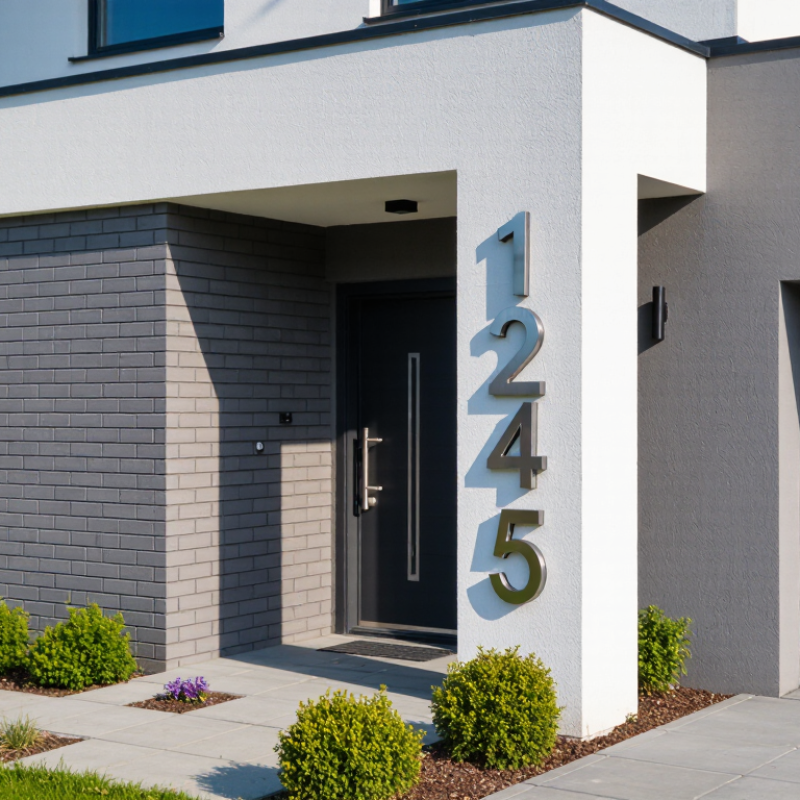
Top 10 House Numbers for Your Home Exterior?
Define Visibility Standards: IFC 505.1 Requires 4-Inch Numbers and ½-Inch Strokes
Choosing house numbers is not only a design decision. It can affect how quickly emergency crews identify your property. IFC 505.1 generally requires address numbers to be at least 4 inches high. Each character should also have a stroke width of at least ½ inch. Local authorities may adopt different editions or add amendments, so confirm the current rule with your building department.
Visibility matters as much as size. Place the numbers where they can be seen from the street or the fire apparatus access road. A dark number on a pale wall usually works well. Avoid placing silver characters beside reflective glass. Trees, porch columns, seasonal decorations, and parked vehicles can hide otherwise compliant numbers.
Walk to the curb during daylight. Then check the view at night. Measure the actual installed characters, not only the advertised dimensions. Some fonts look tall but use thin strokes, creating a weak outline from a distance. Numbers near a garage may need extra contrast when the door is open or shaded. Backlighting can help, but excessive glare may reduce readability.
Measure twice. I once underestimated how much a deep porch shadow changed visibility. A simple test from the access road revealed the problem immediately. Clear spacing between characters also helps, even when the code does not specify a particular gap. Keep the numbers unobstructed and readable throughout the year.
| Rank | House Number Type | Recommended Location | Minimum Character Height | Minimum Stroke Width | Visibility Strength | Best Use | Key Installation Note |
|---|---|---|---|---|---|---|---|
| 1 | High-contrast flat numbers | Front wall, porch column, or entry area facing the street | 4 in or more | ½ in or more | Excellent | Most residential façades | Use strong light-dark contrast and keep landscaping from covering the characters. |
| 2 | Reflective address plaque | Near the driveway entrance or on a visible front post | 4 in or more | ½ in or more | Excellent at night | Long driveways and dark streets | Aim the plaque toward approaching vehicles and avoid glare that obscures the digits. |
| 3 | Internally illuminated numbers | Front elevation or entry canopy | 4 in or more | ½ in or more | Very good at night | Homes with limited ambient lighting | Connect electrical components safely and prevent the light source from washing out the digit shapes. |
| 4 | Raised dimensional numbers | Smooth siding, masonry, or a dedicated address board | 4 in or more | ½ in or more | Very good | Modern and contemporary exteriors | Select a finish that contrasts with the background from the normal viewing distance. |
| 5 | Post-mounted address sign | At the driveway edge, outside the visibility triangle | 4 in or more | ½ in or more | Excellent for set-back homes | Homes far from the public road | Keep the sign readable from both travel directions where practical and do not obstruct sight lines. |
| 6 | Horizontal number bar | Above the garage, porch, or main entrance | 4 in or more | ½ in or more | Good | Wide façades and multi-car garages | Maintain consistent spacing so the full address reads as one clear group. |
| 7 | Vertical number panel | Narrow wall section beside the front door | 4 in or more | ½ in or more | Good | Townhomes and compact entryways | Avoid placing the panel where a storm door, screen, or open door can hide the digits. |
| 8 | Address numbers on a gate | Pedestrian or driveway gate facing the access road | 4 in or more | ½ in or more | Good when unobstructed | Fenced properties | Add a second sign on the building or post if the gate may be open, hidden, or set back from the road. |
| 9 | Low-voltage illuminated plaque | Driveway post, garden wall, or entry path | 4 in or more | ½ in or more | Very good at night | Landscaped entrances | Protect wiring from moisture and confirm that nearby plants will not block the illuminated face. |
| 10 | Secondary side-facing numbers | Side wall visible from a corner or angled approach | 4 in or more | ½ in or more | Good as a supplement | Corner lots and angled streets | Use it in addition to a primary street-facing address display, not as the only identification. |
Visibility standard: IFC 505.1 generally requires approved address identification to be plainly legible and visible from the street or fire apparatus access road. Where required by the adopted code, characters must be at least 4 inches high with a minimum stroke width of ½ inch. Always verify local amendments and placement requirements with the applicable authority having jurisdiction.
Numbers should generally be at least four inches tall. Each character should have strokes at least one-half inch wide. Check local requirements before installation.
Place them where drivers can see them from the street or access road. Avoid trees, columns, decorations, and parked vehicles.
Use strong contrast, such as dark numbers on a pale wall. Keep clear spacing between characters. Test the view from the curb.
Yes. Check the numbers during daylight and after sunset. Headlights, shadows, and glare can change readability. Night testing is important.
Backlit numbers can improve nighttime visibility. Protect wiring from weather. Excessive glare may make the characters harder to read.
Raised metal, ceramic, enamel-coated, and thick acrylic numbers can perform well outdoors. Ceramic may chip, while acrylic may discolor in strong sunlight.
Reflective numbers can stand out under headlights. However, they may appear too bright. Test them from a parked car before deciding.
No. Narrow or decorative fonts may look elegant but become unclear from a distance. I once preferred a stylish font and regretted it.
Painted finishes may peel. Recessed numbers can collect dirt. Hand-painted tiles often need more cleaning and touch-ups.
Measure the actual characters after installation. Walk to the curb in daylight and darkness. Check again with the garage open and the porch shaded.
Choosing the right house numbers involves more than appearance. This guide explains how to create clear, durable, and code-conscious identification for any property exterior. It highlights the visibility standards associated with IFC 505.1, including numbers at least 4 inches high with ½-inch stroke widths, while emphasizing that local requirements should always be confirmed. The article compares metal, ceramic, acrylic, wood, and stone based on climate resistance, readability, maintenance, and long-term performance.
It also ranks the top 10 house-number options by contrast, durability, and ease of recognition. Readers will learn how placement, viewing distance, background color, shadows, and lighting affect emergency visibility. Whether installed near an entryway, garage, mailbox, or boundary wall, House Numbers On House should remain visible from the street in both daylight and low-light conditions. The final selection balances style, installation cost, upkeep, material performance, and applicable local codes.
