
Top 10 Light Up Numbers Suppliers for Global Buyers

Time:2026-09-21 Author:Oliver
0%

The global demand for illuminated event décor, retail displays, and branded installations continues to expand. Light Up Numbers sit at the intersection of these markets, combining visible branding with practical LED technology. MarketsandMarkets estimates that the global digital signage market will grow from approximately USD 27.8 billion in 2024 to USD 45.3 billion by 2029. This growth reflects stronger demand for flexible, energy-efficient visual displays in commercial spaces and public venues.

Yet buying decisions require more than attractive product photos. Grand View Research reports continued expansion in the global LED lighting market, supported by lower energy consumption, longer service life, and improved product efficiency. For global buyers, supplier evaluation should include LED brightness, battery or mains options, casing strength, shipping protection, customization capability, and after-sales support. A number should look impressive in a showroom. It must also remain stable during transport and repeated installation.

This guide reviews the Top 10 Light Up Numbers Suppliers for Global Buyers through a practical sourcing lens. The selection considers manufacturing experience, product consistency, export readiness, customization depth, and transparent communication. Supplier claims should still be verified. No ranking is perfect. Factory audits, sample testing, compliance documents, and production photos can reveal differences that websites often hide. Buyers should also confirm voltage compatibility, flame-retardant materials where relevant, packaging dimensions, warranty terms, and replacement-part availability. These details may seem minor, but one damaged “8” can affect an entire event display. Industry data offers useful direction, although real purchasing outcomes depend on application, budget, and supplier execution.
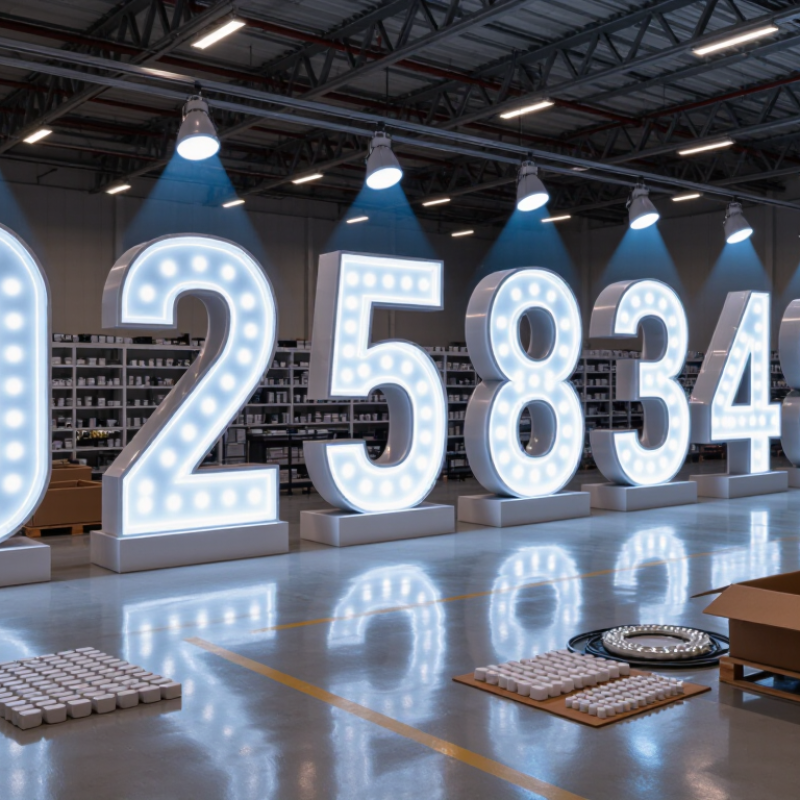
Top 10 Light Up Numbers Suppliers for Global Buyers

Light-Up Numbers Market Scope: LED Lifespan, CRI, and IP Ratings

Top 10 Light Up Numbers Suppliers for Global Buyers

Light-up numbers look simple, but their specifications reveal product quality. The U.S. Department of Energy notes that LED lifetime commonly uses the L70 point, when output falls to 70% of initial brightness. A 50,000-hour rating is therefore not a promise of full brightness for 50,000 hours. Buyers should request LM-80 test data and TM-21 projections for the actual LED package. Thermal design matters too. A warm metal enclosure usually performs better than a tightly sealed plastic cavity.

Color quality affects readability in shops, events, and public displays. ENERGY STAR lighting requirements commonly set CRI at 80 or higher for general applications. For photography, hospitality, or premium retail, CRI 90 or above is more suitable. However, CRI alone can hide weak red rendering. Ask for R9 values and color-temperature tolerance. The figures can be incomplete.

IP ratings describe protection against solids and water under IEC 60529. IP44 may suit sheltered indoor use, while exposed outdoor numbers often need IP65 or higher. IP67 offers temporary immersion protection, but it does not automatically prove long-term weather resistance. Global buyers should check cable glands, drainage paths, adhesives, and test conditions. Ask for certificates, sample photographs, and aging records. A supplier’s datasheet may look precise, yet field performance still depends on installation, voltage stability, and heat.

Top 10 Light Up Numbers Suppliers for Global Buyers

Light-Up Numbers Market Scope: LED Lifespan, CRI, and IP Ratings

The benchmark compares common light-up number application categories used by global buyers. LED lifespan is shown in operating hours, CRI indicates color-rendering quality, and the IP code reflects protection against solids and water under IEC 60529 classifications.

Values represent typical industry specification ranges and are not company- or brand-specific data. Actual performance depends on LED components, power supplies, enclosure design, installation, and operating conditions.

Supplier Selection Criteria: MOQ, Lead Time, Certifications, and Warranty

For global buyers, MOQ should match the sales test, not the factory’s convenience. Request a sample set with one illuminated number, spare LEDs, batteries, and packaging. A practical opening MOQ may be 50–100 units, but custom colors, logos, or large formats can raise it sharply. Ask suppliers to state production time separately from shipping time. Seven production days means little if sea freight adds five weeks.

Lead-time claims need evidence. Request a dated production schedule, material list, and photos from a previous batch. For each model, check voltage, battery life, heat management, and indoor or outdoor suitability. The U.S. Department of Energy reports that LEDs use at least 75% less energy and last up to 25 times longer than incandescent lighting, but poor assembly can erase that advantage. Smaller LEDs are not automatically better.

Certifications must match the destination market and product design. Ask for current test reports, not only printed logos. Depending on the market, relevant documentation may include CE, RoHS, UKCA, FCC, or safety certification for the power adapter. Verify the certificate holder, model number, and testing scope. Warranty terms should specify coverage, response time, replacement limits, and shipping responsibility. A 12-month warranty sounds acceptable, yet it may exclude batteries, fading, moisture, or labor. The IEA’s Energy Efficiency 2023 analysis reinforces the value of efficient lighting, but supplier reliability still depends on inspection records. I would require a pre-shipment sample; this costs time, but skipping it often costs more.

Top 10 Light-Up Numbers Suppliers by Product Range and Global Reach

Top 10 Light Up Numbers Suppliers for Global Buyers

The top ten light-up numbers suppliers should be compared by product range and global reach. Product range matters beyond size. Look for LED numbers, outdoor-rated units, battery models, custom colors, and modular designs. Suppliers serving events often provide numbers from 30 centimeters to over two meters. Some also offer matching letters, symbols, bases, cables, and transport cases.

Global reach requires more than a shipping map. Check production capacity, export experience, voltage options, packaging quality, and local support. A 2024 Fortune Business Insights report valued the global LED lighting market at USD 78.17 billion in 2023. It projects strong expansion through 2032. This growth supports wider component availability, but it does not guarantee better number quality. UFI’s Global Exhibition Barometer also reported continued recovery in international events, increasing demand for reusable display products.

Tips: Request a sample video before ordering. Ask for brightness readings, battery duration, fire-safety documents, and replacement-part availability. Confirm plug standards for every destination. A supplier may claim worldwide delivery, yet customs handling can remain unclear. I would not rank suppliers by reach alone. A beautiful catalog can hide slow communication or weak after-sales service. Product testing, packing inspection, and realistic lead times deserve equal weight. Temperature changes, wet venues, and repeated loading can expose design flaws quickly.

Top 10 Light Up Numbers Suppliers for Global Buyers - Top 10 Light-Up Numbers Suppliers by Product Range and Global Reach

Rank Supplier Profile Primary Product Range Common Height Range Lighting Options Typical Materials Customization Common Export Coverage Typical MOQ Typical Lead Time Common Documentation
1 Supplier A
Broad Range
Indoor and outdoor light-up numbers; event signage; freestanding digits 30–180 cm Warm white, cool white, RGB, battery or mains powered Aluminium, acrylic, steel frames, PVC Custom colors, logos, fonts and cable lengths North America, Europe, Middle East, Asia-Pacific 1–10 units 15–30 days Commercial invoice, packing list, test reports on request
2 Supplier B
Event Focus
Wedding numbers, birthday digits, table numbers and stage displays 40–150 cm LED strip, LED bulbs, dimmable and remote-controlled options Wood composite, MDF, acrylic and metal Shape, finish, color temperature and control method Europe, North America, Australia and Southeast Asia 5–20 units 12–25 days Packing list, invoice and electrical specifications
3 Supplier C
Outdoor Ready
Weather-resistant illuminated digits, venue signs and entrance numbers 50–200 cm Low-voltage LED, sealed modules and programmable RGB Powder-coated aluminium, stainless steel and acrylic IP-rated housings, mounting systems and branded finishes United States, Canada, Europe, Gulf countries 1–8 units 20–35 days Electrical data sheet, installation guide and export documents
4 Supplier D
Retail Display
Shop-window numbers, promotional displays and seasonal retail props 20–120 cm Edge-lit acrylic, backlit panels and static white LED Acrylic, ABS, aluminium and laminated board Retail colors, mounting brackets and packaging formats Western Europe, North America, Japan and Australia 10–50 units 18–30 days Material declaration, carton details and product drawings
5 Supplier E
Custom Fabrication
Large-format digits, architectural signage and custom-shaped numerals 80–300 cm Front-lit, halo-lit, RGB and addressable LED systems Aluminium, stainless steel, polycarbonate and acrylic Full design development, prototypes and engineering drawings Europe, North America, Middle East and selected African markets 1–5 units 25–45 days CAD files, wiring diagrams, invoices and shipping documents
6 Supplier F
Portable Series
Battery-powered digits, pop-up event numbers and lightweight displays 25–100 cm Battery LED, USB-powered and low-voltage white light Foam board, ABS, acrylic and lightweight aluminium Battery compartment, timer, remote and color options North America, Europe, Australia and online retail markets 10–30 units 10–22 days Battery information, packing list and user instructions
7 Supplier G
Hospitality Use
Hotel room numbers, restaurant displays, venue identifiers and lobby signage 15–100 cm Warm white, neutral white, backlit and halo-lit Brushed metal, acrylic, wood veneer and PVC Typeface, finish, wall mounting and wiring configuration Europe, Middle East, Southeast Asia and North America 10–100 units 20–40 days Installation drawings, material details and commercial documents
8 Supplier H
Rental Friendly
Reusable event digits, modular number sets and touring displays 60–180 cm Replaceable LED bulbs, dimmable LED and quick-connect cabling Steel, aluminium, plywood and impact-resistant plastic Foldable bases, stacking design and replacement parts Europe, United States, Canada and New Zealand 2–15 units 15–30 days Assembly guide, spare-parts list and shipping paperwork
9 Supplier I
Premium Finish
Decorative metal digits, luxury venue signs and high-end interior displays 30–160 cm Warm white LED, concealed lighting and adjustable brightness Brass-effect metal, stainless steel, acrylic and wood Metal finishes, textured surfaces and bespoke dimensions Europe, Gulf region, North America and East Asia 1–10 units 25–45 days Finish samples, product drawings and export documentation
10 Supplier J
Volume Production
Standardized number sets, promotional batches and wholesale event displays 20–150 cm Static white LED, color-changing LED and timer-controlled systems Acrylic, PVC, aluminium and powder-coated steel Bulk color matching, packaging and private artwork files Europe, North America, Latin America, Africa and Asia-Pacific 20–200 units 20–40 days Bulk packing list, invoice, carton labels and product specifications

Note: Supplier identities are intentionally omitted. Specifications represent common market ranges for illuminated number products and should be verified with each supplier before purchase.

Technical Comparison: 12V/24V Systems, CCT, Brightness, and ≥80 CRI

Top 10 Light Up Numbers Suppliers for Global Buyers

Technical Comparison: 12V/24V Systems, CCT, Brightness, and ≥80 CRI

Global buyers should compare light up numbers by measured performance, not catalog photos. A 12V system suits compact signs and short wiring runs. A 24V system usually reduces current and voltage drop across larger installations. Longer cable paths still require voltage testing at the final module.

Check the stated CCT before approving samples. Warm white near 2700–3000K creates a softer retail appearance. Neutral white around 4000K improves clarity in offices and public displays. Cool white from 5000–6500K looks sharper, but it can appear harsh indoors. Ask suppliers for brightness data in lumens, module spacing, and operating distance. “Very bright” is not a technical specification.

CRI matters. A rating of 80 or higher supports more natural colors, especially around printed graphics and product displays. Request an independent test report, LED bin information, thermal data, and a sample powered at its rated voltage. In practical testing, inspect brightness uniformity at corners and joints. Small differences become obvious at night. IP protection may also matter outdoors, but ratings should match the enclosure design.

Some datasheets omit cable resistance or ambient-temperature limits. That is a weakness. Suppliers should state warranty terms, expected service life, and replacement procedures clearly. A sample may perform well while production batches vary slightly. Recheck color, brightness, and current draw before shipment. No supplier is perfect. Reliable documentation makes problems easier to detect.

Buyer Verification: RoHS, CE, UL Compliance, Samples, and 50,000-Hour LEDs

When comparing the Top 10 Light Up Numbers Suppliers for global buyers, verification matters more than polished product photos. Request a working sample before approving volume production. Check brightness, wiring, surface temperature, mounting strength, and performance after repeated switching. A claimed 50,000-hour LED life is not a guarantee for the complete number sign. Heat, power supplies, moisture, and installation quality can shorten it.

Ask suppliers for RoHS test reports, CE documentation, and applicable UL evidence. RoHS records should identify restricted-substance testing and the product version tested. CE marking reflects the manufacturer’s conformity responsibility; it is not automatically an independent safety certificate.

For UL-related claims, verify the certification number and scope through the official certification database. The U.S. Department of Energy’s Solid-State Lighting research reports continue to identify thermal management, reliability, and testing methods as major LED priorities.

That supports a practical lesson: compliance paperwork cannot replace physical inspection.

Tips: Ask for three samples.

Photograph labels and wiring. Compare them with the reports. Confirm whether the 50,000-hour figure follows LM-80 and TM-21 methods, or merely appears in a sales sheet.

I have seen attractive samples fail after extended heat exposure, so a short test can be misleading. Request batch records, voltage tolerances, warranty terms, and replacement-part availability. Supplier rankings can guide research, but independent evidence should decide the purchase.

FAQS

What does a 50,000-hour LED lifespan actually mean?

It usually means the light may fall to 70% of its original brightness. Full brightness is not guaranteed. Ask for test data.

Why does thermal design matter for illuminated numbers?

Heat can shorten LED life and reduce brightness. Warm metal housing often releases heat better than a sealed plastic cavity. Small details matter.

What CRI level suits light-up numbers?

CRI 80 or higher suits general displays. Photography and premium retail often need CRI 90 or above. Check red rendering too.

Why should buyers ask about R9 and color temperature?

CRI can hide weak red performance. R9 helps reveal red accuracy. Color temperature tolerance supports consistent appearance across several numbers.

Which IP rating suits outdoor illuminated numbers?

Sheltered indoor areas may use IP44. Exposed outdoor displays often need IP65 or higher. IP67 does not prove permanent weather resistance.

What should buyers inspect beyond an IP rating?

Check cable glands, drainage paths, adhesives, and test conditions. A neat datasheet can still hide installation weaknesses.

How should buyers set the opening order quantity?

Match the quantity to a real sales test, not factory convenience. A sample set might include one number, spare LEDs, batteries, and packaging.

How can buyers verify a supplier’s lead time?

Request separate production and shipping schedules. Ask for dated plans, material lists, and previous-batch photographs. Seven production days may still mean five weeks at sea.

Which documents and warranty details deserve attention?

Request current test reports matching the model and destination market. Confirm the certificate holder and testing scope. Warranty terms should cover response time, replacements, batteries, moisture, and shipping.

What should happen before final shipment?

Require a pre-shipment sample and inspect brightness, battery duration, packing, plugs, and replacement parts. Skipping inspection may cost more later. I would stay cautious.

Conclusion

This guide helps global buyers evaluate Light Up Numbers for events, retail displays, hospitality spaces, exhibitions, and permanent installations. It explains the key market factors, including LED lifespan, color rendering index (CRI), ingress protection (IP) ratings, brightness, and color temperature (CCT). Buyers can also compare 12V and 24V systems according to installation scale, energy efficiency, wiring requirements, and safety considerations.

The supplier selection section focuses on practical purchasing criteria such as minimum order quantity, production lead time, customization capability, certifications, packaging, and warranty coverage. A structured comparison of ten supplier types highlights differences in product range and international service capacity without relying on brand promotion. Before placing an order, buyers should request samples, verify RoHS, CE, and applicable UL compliance, confirm LED performance of up to 50,000 hours, and review test reports, electrical specifications, and after-sales support.

Oliver

Oliver

Oliver is a seasoned marketing professional with a wealth of expertise in driving brand awareness and engagement. With a deep understanding of our company's product offerings, he consistently delivers high-quality content that enriches our professional blog. His insights not only shed light on......