
A business sign often speaks before a staff member greets a customer. An effective Outdoor Sign should be visible, readable, and suited to its surroundings. Yet choosing one is rarely as simple as selecting the largest display. Storefront width, traffic speed, viewing distance, weather exposure, and local design requirements all influence the decision. A small café on a narrow street needs different visibility from a roadside warehouse. Those differences matter.
This guide examines practical options, including channel letters, monument signs, pylon signs, blade signs, and A-frame displays. Channel letters can give a clean storefront identity, especially after sunset. Monument signs offer a grounded, durable presence near entrances and office parks. Pylon signs help drivers identify businesses from farther away. Blade signs extend over sidewalks, while A-frames support short-term messages near pedestrian routes. Each format has strengths, costs, maintenance needs, and limitations. LED lighting may improve nighttime readability, but brightness should remain comfortable for nearby visitors and neighbors. Materials also deserve attention. Powder-coated aluminum, acrylic, vinyl, and treated wood age differently in sun and rain.
Reliable sign planning starts with observation, not assumptions. Walk the property at different times, photograph sightlines, and note competing signs. Ask whether customers can understand the message within a few seconds. That test is useful. It is not perfect. Brand colors may look different under cloudy skies, and a beautiful design can disappear behind parked vehicles. Professional installers should confirm structural support, electrical safety, accessibility, and applicable local approvals. The best choice balances recognition, durability, budget, and honest customer experience.
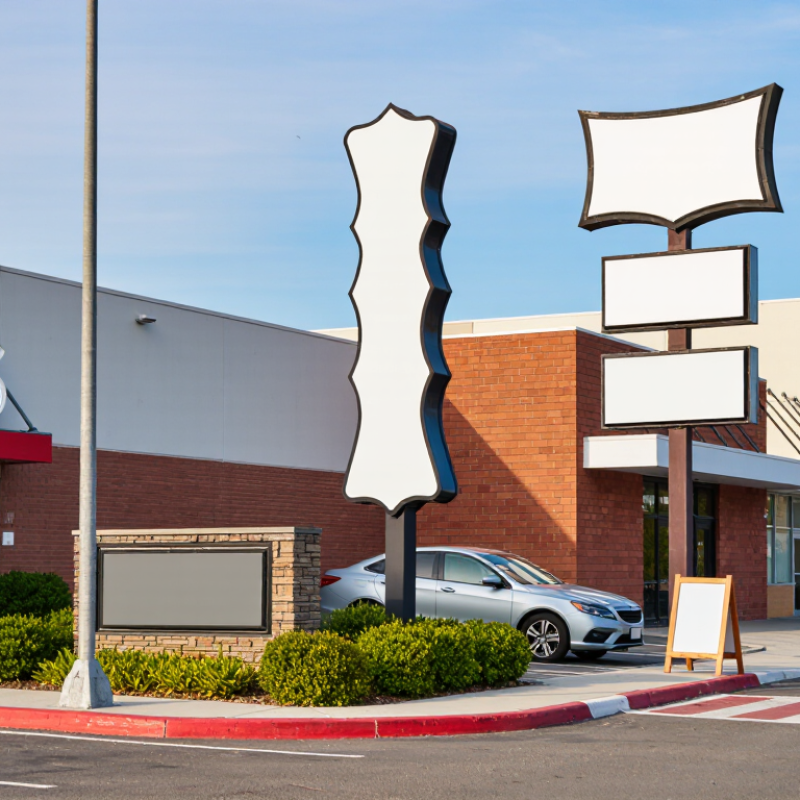
Outdoor signage is any visual communication placed outside a business, building, or property. It identifies a location, guides visitors, and communicates essential information before customers enter. Effective signs combine readable lettering, strong contrast, durable materials, and placement that matches pedestrian and vehicle movement.
Different businesses need different sign types. Monument signs suit office parks, schools, and medical facilities because their low, solid structures feel permanent. Pylon signs work well near busy roads, where height improves visibility. Channel letters mounted on a building create a clean identity for shops and offices. Directional signs help visitors find entrances, parking areas, and reception points without confusion. Awnings can display opening details while providing shade near storefronts.
Purpose matters more than decoration. A roadside sign should be readable within seconds, even in rain or evening glare. A building sign needs accurate spacing and secure mounting for changing weather. Lighting should support visibility, not overwhelm nearby homes or drivers. Local rules may also control dimensions, brightness, placement, and permits.
Small details affect trust. Peeling edges or uneven letters can make a busy business appear careless. I have also seen oversized signs hide useful information. Bigger is not always better. Testing visibility from the actual viewing distance can reveal problems that design software misses. Materials, maintenance access, and future repairs deserve attention before installation. A sign may look excellent on day one, yet age poorly without a practical care plan.
| Outdoor Sign Type | Primary Purpose | Best Business Applications | Typical Materials | Illumination Options | Key Advantages | Main Considerations | Visibility Potential |
|---|---|---|---|---|---|---|---|
| Monument Sign | Identify a property, facility, or entrance from the roadside. | Office parks, schools, medical facilities, residential communities, and retail centers. | Brick, stone, concrete, aluminum, steel, acrylic, or high-density foam with protective coating. | External lighting, halo lighting, or internally illuminated faces. | Permanent appearance, strong property identification, and compatibility with landscaped entrances. | Requires a suitable ground location, foundation work, and compliance with local sign-height and setback rules. | High at close and medium roadside distances |
| Pylon Sign | Display business identification high above traffic and nearby obstructions. | Shopping centers, fuel stations, hotels, restaurants, and businesses along major roads. | Structural steel or aluminum frames with aluminum composite, acrylic, or polycarbonate panels. | Internal LED illumination or externally mounted lighting. | Excellent long-distance visibility and space for multiple tenants or messages. | Often subject to strict zoning, engineering, wind-load, height, and permitting requirements. | Very high from roads and parking areas |
| Monument-Style Directional Sign | Guide visitors and organize movement across a multi-building property. | Business campuses, hospitals, universities, resorts, and large commercial properties. | Aluminum, steel, masonry, acrylic, reflective vinyl, or weather-resistant composite panels. | Usually non-illuminated; may use landscape or low-voltage external lighting. | Improves wayfinding and reduces visitor confusion while maintaining a coordinated property appearance. | Messages must be concise, readable, and positioned at decision points without obstructing sightlines. | Medium, optimized for on-site traffic |
| Wall-Mounted Sign | Identify a business directly on the exterior wall of its building. | Retail stores, restaurants, professional offices, warehouses, and service businesses. | Aluminum, acrylic, formed plastic, channel-style letters, or composite panels. | Non-illuminated, front-lit, backlit, or internally illuminated lettering. | Efficient use of existing architecture, strong storefront identification, and flexible design options. | Visibility depends on building position, façade contrast, mounting height, and local building regulations. | High for passing pedestrians and nearby vehicles |
| Channel Letter Sign | Present individual letters or symbols with strong dimensional visibility. | Storefronts, shopping centers, restaurants, banks, and office entrances. | Fabricated aluminum letters with acrylic faces and LED components. | Front-lit, backlit, or combination illumination. | Clear branding area, strong nighttime legibility, and a polished architectural appearance. | Electrical connections, maintenance access, brightness limits, and landlord or municipal approval may apply. | High day and night visibility |
| Projecting or Blade Sign | Extend outward from a building to attract people moving along a sidewalk. | Retail shops, cafés, salons, galleries, hotels, and pedestrian-oriented districts. | Aluminum, steel, wood, acrylic, or weather-resistant composite materials. | Non-illuminated, edge-lit, or externally illuminated. | Visible from both directions along a walkway and useful where a façade faces parallel to foot traffic. | Must maintain required clearance over sidewalks and may be restricted by building or heritage regulations. | High for pedestrians and low-speed traffic |
| A-Frame or Sidewalk Sign | Promote nearby offers, services, menus, or temporary information. | Restaurants, cafés, salons, local retailers, and event-based promotions. | Powder-coated metal, wood, plastic, chalkboard panels, or printed inserts. | Normally non-illuminated. | Portable, relatively affordable, easy to update, and effective at pedestrian decision points. | May require daily placement and removal; wind resistance, sidewalk width, and public-right-of-way rules are important. | Medium for nearby pedestrians |
| Electronic Message Center | Display changing text, schedules, alerts, promotions, or public information. | Schools, churches, municipalities, service facilities, entertainment venues, and roadside businesses. | Aluminum cabinet, LED modules, protective glazing, and steel support structures. | Built-in LED illumination with programmable brightness controls. | Supports frequently changing content and can communicate time-sensitive information without replacing panels. | Digital signage rules may limit brightness, animation, message duration, operating hours, and installation locations. | Very high when positioned toward traffic |
| Banner Sign | Communicate temporary announcements, openings, sales, events, or seasonal messages. | Construction sites, schools, retail promotions, community events, and temporary business campaigns. | Coated vinyl, mesh fabric, polyester, or other outdoor-rated flexible materials. | Usually non-illuminated; may use external floodlighting. | Fast production, flexible sizing, relatively low cost, and easy message changes. | Needs secure fastening and proper tensioning; wind, weathering, and temporary-sign regulations affect service life. | Medium to high depending on size and placement |
| Vehicle-Mounted or Fleet Sign | Turn company vehicles into mobile identification and promotional displays. | Delivery services, contractors, maintenance providers, mobile professionals, and field-service businesses. | Outdoor-rated vinyl lettering, cut vinyl graphics, perforated window film, or full vehicle wraps. | Non-illuminated; vehicle lighting remains separate from the sign graphics. | Provides repeated exposure across service areas and combines contact information with business identification. | Design must remain legible at distance; installation quality, vehicle condition, and local parking rules can affect results. | Variable; potentially high across broad service areas |
Visibility ratings are general planning indicators. Actual performance depends on viewing distance, traffic speed, sign size, contrast, lighting, placement, weather, and local regulations.
Outdoor signage is visual communication placed outside a business, building, or property. It identifies locations, guides visitors, and shares essential information before entry.
Consider viewing distance, traffic direction, weather, lighting, and maintenance access. A roadside sign needs quick recognition. A downtown entrance may need dimensional letters.
Tall roadside signs improve visibility for drivers traveling from a distance. Use short wording, strong contrast, and generous letter spacing. Do not overfill the sign.
Monument signs suit offices, schools, medical facilities, and planned properties. Their low, solid structure creates a permanent appearance near entrances. Nearby landscaping can hide them.
Channel letters identify businesses directly on building exteriors. They create a clean appearance and can remain visible after dark. Secure mounting matters during strong weather.
Directional signs guide people toward entrances, parking areas, reception points, and exits. Place them where decisions occur, not after the turn. Small arrows can prevent large confusion.
Lighting can improve visibility during evenings, rain, and low-light conditions. Brightness should support reading without disturbing drivers or nearby homes. More light is not always better.
View the sign from actual street distances during daylight and evening hours. Check shadows, glare, parked vehicles, and nearby distractions. Ask someone unfamiliar with the design what they noticed first. The result may be humbling.
Inspect peeling edges, uneven letters, loose hardware, fading, and damaged surfaces. Plan cleaning, repainting, lighting checks, and future repairs before installation. A sign may look excellent on day one. That does not guarantee long-term performance.
Outdoor signage is an important business tool that helps attract attention, identify a location, communicate services, and guide customers. An effective Outdoor Sign should match the company’s purpose, building style, target audience, and surrounding environment. When selecting a sign, businesses should consider size, readability, color contrast, lighting, viewing distance, weather resistance, installation space, and available budget. These factors influence how clearly the sign performs during both daytime and nighttime conditions.
Common outdoor sign types include storefront signs, monument signs, freestanding signs, projecting signs, roadside signs, and illuminated signs. Each option offers different advantages in visibility, durability, flexibility, and cost. Businesses should compare materials, construction quality, expected lifespan, energy use, and maintenance needs before making a decision. They should also review local requirements related to sign dimensions, placement, lighting, permits, and safety. Professional installation and regular cleaning, inspections, and repairs can preserve appearance, improve performance, and extend the sign’s service life.
