
Choosing a Wet Sign Floor product for global markets in 2026 requires more than selecting a bright yellow board. Buyers must consider visibility, stability, material quality, language needs, and the environments where signs will work.
A sign placed beside a supermarket entrance faces different conditions than one used in a hotel corridor. Water, cleaning chemicals, trolley traffic, poor lighting, and strong air movement can expose weak designs quickly. Look for high-contrast colors, large warning symbols, readable wording, and a stable folding frame. Some buyers also need multilingual messages or symbol-led communication. That choice can improve understanding across different regions.
Dr. David Michaels, a recognized occupational safety expert, said, “The goal of safety and health programs is to prevent injuries and illnesses.” A floor sign supports that goal, but it cannot replace prompt cleaning or proper staff training. It is a warning tool, not a complete safety system.
Global buyers should request material specifications, product dimensions, load information, packaging details, and quality-control records. They should also test samples on smooth tile, textured vinyl, and polished stone. A sign that works indoors may fail near a windy entrance. That assumption is common.
Not every supplier provides equally clear evidence. Buyers should ask careful questions. They should inspect hinges, feet, printing durability, and storage convenience. A lower price may look attractive, yet frequent replacement can increase the real cost. Reliable purchasing combines practical testing, documented quality, and honest risk assessment. No sign is perfect. Better decisions begin with recognizing that limitation.
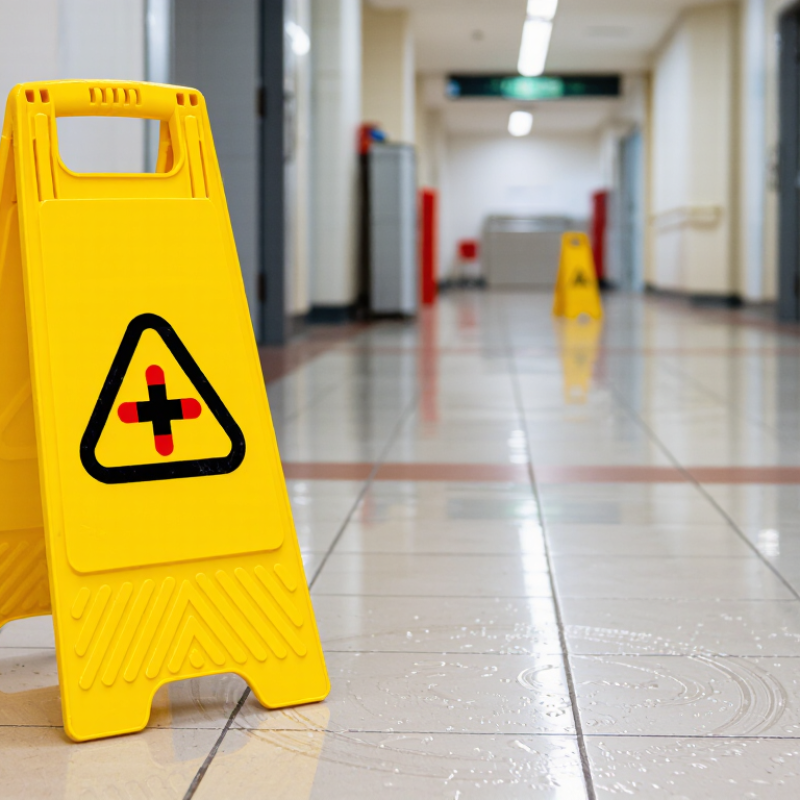
How to Choose Wet Floor Signs for Global Buyers in 2026?
Wet floor signs must match the safety language of their target market. In the United States, ANSI Z535.5 covers accident-prevention tags and floor signs, including signal words, contrast, and readable layouts. ISO 7010 supports standardized graphical symbols, while ISO 3864 addresses safety-sign colors and design principles. These systems overlap, but they are not identical.
Check the details.
A yellow sign with “Caution” may suit one market, but another may expect a local-language warning and a recognized pictogram. Buyers should verify height, viewing distance, stability, and indoor or outdoor suitability. A wide base helps on smooth tile. High-contrast graphics remain clearer under dim corridor lighting. However, compliance alone does not guarantee visibility. A sign hidden behind a cleaning cart has little practical value.
The risk is measurable.
The UK Health and Safety Executive reported that slips, trips, and falls on the same level represented about 29% of employer-reported non-fatal workplace injuries in 2022/23. In the United States, the Bureau of Labor Statistics recorded 865 fatal occupational falls to a lower level in 2022, showing why temporary warnings should support—not replace—hazard control.
A practical purchasing review should compare local standards, cleaning procedures, languages, and expected foot traffic. Field testing is wiser than relying only on a supplier specification sheet. Some signs look robust but fold easily in real corridors. That weakness deserves honest attention.
Effective wet floor signs need more than bright color. They must communicate danger quickly, across languages and workplace cultures. The U.S. Bureau of Labor Statistics recorded 865 fatal workplace injuries involving falls, slips, and trips in 2022. This figure shows why clear warnings deserve careful selection. Choose signs with high-contrast yellow or red panels, bold “Caution” wording, and a recognizable slipping-person symbol. The message should remain visible from several meters away.
Physical design matters just as much. Select a wide, weighted base that resists tipping near entrances, kitchens, and cleaning zones. Folding legs should open smoothly, even with wet gloves. Waterproof plastic helps prevent blurred printing and surface damage. For international purchasing, confirm that symbols follow relevant local standards, such as ISO 7010 or regional safety-sign rules. Do not assume one format fits every country. That assumption can fail.
Tips:
Test visibility at worker eye level, not only on a product table. Place one sign before the hazard and another beyond it when traffic is heavy. Check stability on tile, polished stone, and textured flooring. Some lightweight models look convenient but move easily under air currents or trolley contact. Record inspection results during routine safety checks. This small step creates useful evidence, although it may be missed during busy shifts. Use multilingual wording only when it remains large and readable.
How to Choose Wet Floor Signs for Global Buyers in 2026?
Material choice affects service life, cleaning, and shipping costs. Polypropylene is lightweight and resists moisture, common detergents, and repeated folding. PVC can feel sturdier, but it may become brittle in cold storage areas. Recycled plastic can reduce material impact, though its color and strength may vary. Ask suppliers for test data, temperature ranges, and chemical-resistance details. In facility inspections, I have seen attractive signs crack after one winter. Appearance alone is not proof of durability.
Design should match the cleaning environment. A folding A-frame stores easily and stands visibly in corridors. A weighted base works better near entrances, where airflow and foot traffic are stronger. Large pictograms support quick understanding across languages. Bilingual warnings may still be useful in international workplaces. Rounded edges reduce snagging risks. Stackable designs save warehouse space, but thin hinges can fail earlier than expected. This is an area worth checking carefully.
Tips: Choose high-contrast colors, such as yellow with black symbols. Reflective strips help in dim hallways. Photoluminescent details may support visibility during brief lighting interruptions. Test the sign from several angles, not just directly ahead. Confirm local visibility and safety requirements before purchasing. Consider whether workers can carry it with wet gloves. Small handles matter. Suppliers should provide material specifications, inspection records, and sample units before a large order.
| Sign Option | Typical Material | Common Design | Visibility Features | Durability & Maintenance | Best-Suited Locations | Portability | Relative Cost | Key Buying Consideration |
|---|---|---|---|---|---|---|---|---|
| Standard Folding A-Frame | Injection-molded polypropylene or polyethylene | Two-sided, freestanding, folding triangular frame | Yellow or orange body Large contrast text Optional reflective panel | Lightweight and water-resistant; wipe-clean surfaces. Hinges should be checked for cracking or looseness. | Hotels, offices, retail stores, schools, airports, and cleaning-service operations | ★★★★★ Excellent | $$ Moderate | Choose a wide stance and strong hinge for frequent opening and closing. |
| Heavy-Duty A-Frame | Thicker polypropylene, polyethylene, or molded plastic composite | Reinforced folding frame with a broader base | High-contrast graphics Large warning symbol Optional reflective markings | Better resistance to impact and repeated commercial use; heavier construction improves stability. | Shopping centers, hospitals, warehouses, transport terminals, and busy public areas | ★★★★☆ Very Good | $$$ Medium-High | Verify base stability and folded dimensions before selecting for storage or transport. |
| Wall-Mounted Flip Sign | ABS plastic, coated metal, or rigid PVC | Hinged panel that folds flat against a wall or service cart | Bold warning message High-contrast color Visible at eye level | Easy to clean and store; requires secure mounting and a suitable installation surface. | Washrooms, kitchens, elevators, corridors, and compact commercial spaces | ★★★☆☆ Good | $$ Moderate | Use where floor space is limited, but do not rely on it when a floor-level obstruction warning is needed. |
| Cone-Style Warning Sign | Flexible PVC, thermoplastic rubber, or molded plastic | Conical body with a weighted or broad base | Bright fluorescent color Reflective collar option Symbol-based graphics | Flexible versions resist minor impacts; textured surfaces can collect dirt and require regular cleaning. | Parking areas, loading zones, industrial facilities, and large open spaces | ★★★★☆ Very Good | $$ Moderate | Confirm resistance to wind, vehicle contact, and outdoor temperature changes. |
| Retractable Belt Barrier with Sign Panel | Metal or molded-plastic post with polyester belt and printed panel | Portable post-and-belt system creating a temporary restricted area | Large panel area High-contrast belt Optional reflective graphics | Suitable for repeated indoor use; moving parts and belt mechanisms require inspection. | Airports, hotels, museums, event venues, and facilities with larger spill zones | ★★★☆☆ Good | $$$$ High | Best when the risk area is wider than a single sign can effectively identify. |
| Compact Counter or Cart Sign | Foldable polypropylene, laminated board, or rigid PVC | Small tent-style or clip-on sign for carts and janitorial stations | Short viewing distance High-contrast message Small warning icon | Convenient for controlled areas; less suitable for heavy impact, high traffic, or outdoor exposure. | Cleaning carts, reception desks, small service areas, and temporary indoor tasks | ★★★★★ Excellent | $ Low | Use as a supplementary notice rather than the only warning in a public walkway. |
| Outdoor Reflective Folding Sign | UV-resistant plastic, aluminum composite, or coated metal | Freestanding folding sign with reflective or retroreflective graphics | Fluorescent background Reflective lettering Large bilingual panel option | Designed for greater exposure to sunlight and moisture; check for fading, corrosion, and graphic wear. | Outdoor entrances, car parks, construction-adjacent areas, and covered walkways | ★★★★☆ Very Good | $$$ Medium-High | Confirm the product is intended for outdoor use and select reflective graphics for low-light conditions. |
| Bilingual or Multilingual Sign | Plastic, aluminum composite, or laminated rigid board | Two-sided or multi-language panel with text and safety symbols | Universal warning icon High contrast Multiple languages | Performance depends on the base material and print finish; laminated graphics are easier to wipe clean. | International hotels, airports, tourist venues, factories, and multinational workplaces | ★★★★☆ Very Good | $$$ Medium-High | Use accurate local-language translations and avoid overcrowding the warning panel. |
How to Choose Wet Floor Signs for Global Buyers in 2026?
Selecting a wet floor sign starts with the facility, not the catalogue. In kitchens, hospitals, and shopping centres, choose bright signs with large, multilingual wording. Symbols help visitors who cannot read the local language. OSHA identifies slips, trips, and falls as a major workplace hazard. The U.S. Bureau of Labor Statistics recorded 211,640 private-industry cases involving days away from work in 2022. Visibility matters.
Read the room. Warehouses need wide bases that resist forklift airflow and accidental contact. Outdoor sites need weighted, wind-resistant frames and materials that tolerate ultraviolet exposure. Cold storage areas require plastics that remain flexible below freezing. Cleaning teams may prefer foldable signs, but thin hinges can fail after repeated use. A practical inspection should check legibility from several metres, stability on textured floors, and resistance to disinfectants. There is no perfect universal sign. A bright triangle can still disappear beside a bright retail display. For wet kitchens, use corrosion-resistant hardware and colours that contrast with stainless steel. For healthcare facilities, avoid sharp edges and difficult-to-clean surfaces. Buyers should compare test data, material specifications, and replacement-part availability. Local workplace-sign requirements also need checking before shipment, because international expectations are not identical.
Selecting signs for different facilities and environmental conditions
The chart uses a practical 1–5 selection index, where 5 indicates the feature should receive the highest priority. Indoor public areas typically prioritize visibility and rapid deployment, while industrial and outdoor locations require stronger bases, weather resistance, and corrosion-resistant materials. Always verify local workplace-safety and accessibility requirements before purchasing.
Reference framework: OSHA 29 CFR 1910.22 and 1910.145 principles for maintaining safe walking-working surfaces and using visible hazard signs; local regulations may differ.
How to Choose Wet Floor Signs for Global Buyers in 2026?
For international purchasing, compliance should guide the sign design. Check workplace safety rules in the destination market before approving production. Requirements may cover color contrast, warning symbols, language, height, stability, and visibility. A sign that works in a hotel may fail in a factory corridor. Request material specifications, test records, and quality inspection photos from the supplier. Do not rely on a product image alone. It can hide weak hinges, thin plastic, or unclear lettering.
Customization must remain practical. Add local languages, facility codes, QR instructions, or reflective panels when needed. Keep the warning readable from several meters away. Avoid overcrowding the sign with marketing text. Confirm folding size, open height, base width, and wind resistance. I have found that buyers often measure the display area but forget storage space. That mistake increases warehouse pressure and handling costs.
Tips: Confirm the destination’s labeling expectations with a qualified local adviser. Use durable packaging with corner protection and moisture barriers. Ask for a sample before ordering a full container. Check carton dimensions, gross weight, pallet limits, and customs documents early. Product descriptions and tariff classifications must match the actual goods. Shipping terms should be clear, but they do not replace import planning. Small details matter. Even experienced buyers sometimes overlook translated instructions or damaged cartons. That deserves a second review.
Safety wording and symbols differ between countries. Use the local language and recognized pictograms. A yellow warning may not be enough. Check local workplace requirements before ordering.
Choose strong color contrast and bold lettering. A slipping-person symbol can communicate quickly. The message should remain clear from several meters away. Dim corridors need clearer graphics.
Test signs on tile, polished stone, and textured floors. A wide, weighted base reduces tipping. Check the sign near doors and moving carts. Air currents can move lightweight models.
Waterproof plastic helps protect printing. The surface should resist blurred text and damage. Open folding legs with wet gloves. That small test matters.
Heavy foot traffic may require one sign before the hazard. Place another sign beyond it when appropriate. Use clear spacing around the wet area. One hidden sign is useless.
Request material details, test records, and inspection photos. Ask for a physical sample before a large order. Product images can hide weak hinges or thin plastic. A sample reveals more.
Add local languages when the text stays readable. Facility codes or reflective panels may help. Avoid crowding the sign with promotional wording. More information is not always better.
Confirm carton size, gross weight, pallet limits, and storage dimensions. Use corner protection and moisture barriers. Check customs documents before shipment. Translated instructions are sometimes forgotten.
Choosing the right Wet Sign Floor for global buyers in 2026 requires more than selecting a bright warning board. Buyers should first understand the safety standards and labeling expectations of their target markets, then evaluate essential features such as clear wording, strong visibility, stable construction, slip-resistant bases, and easy storage. Materials and designs should match the facility’s needs, with options suitable for indoor corridors, commercial kitchens, healthcare spaces, warehouses, and outdoor areas. Color contrast, reflective elements, multilingual messaging, and pictograms can improve recognition in different environments and among diverse users.
Environmental conditions are equally important. Moisture, cleaning chemicals, temperature changes, wind, and heavy foot traffic may affect product performance. Before purchasing, confirm compliance documents, customization capabilities, packaging details, and international shipping requirements. A reliable supplier should provide consistent quality, practical dimensions, durable materials, and documentation that supports safe use across markets. By comparing these factors carefully, global buyers can choose signs that improve communication, reduce accident risks, and deliver dependable value in 2026.
