

Illuminated Acrylic Letters: The Engineering Whitepaper
An in-depth look at material specifications, optical diffusion physics, global compliance frameworks, and production roadmaps for B2B signage buyers.
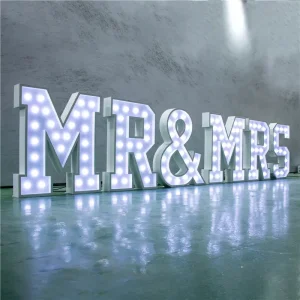
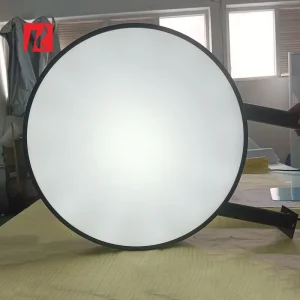
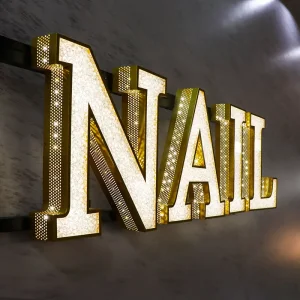
In contemporary commercial environments, exterior and interior signage serve as the physical translation of digital brand identities. Choosing an Illuminated Acrylic Letters Manufacturer is not merely a purchasing decision; it is a critical engineering partnership. Acrylic, or Polymethyl Methacrylate (PMMA), when combined with advanced Solid-State Lighting (SSL) technologies, provides the highest optical clarity, weatherability, and design versatility among modern commercial structural materials. This whitepaper analyzes the manufacturing methodologies, materials science, and global quality paradigms that distinguish premium signage from low-cost alternatives.
1. Macro Industry Trends & Global Signage Evolution
The signage industry is undergoing a structural transition driven by urbanization, regulatory sustainability mandates, and the widespread integration of smart-city infrastructure. Traditionally, gas-discharge neon tubes and heavy metal channel letters dominated commercial storefronts. While neon had historical aesthetic value, its high power consumption, susceptibility to glass breakage, and high maintenance overhead made it commercially unsustainable.
Today, Solid-Cast illuminated acrylic letters integrated with low-voltage (12V/24V DC) LED circuits have become the industry standard. Global brands seek high efficiency, long-term UV resistance, and zero maintenance requirements over a 5 to 10-year operational lifecycle. This demand is further accelerated by smart illumination protocols (such as DMX512 or IoT-enabled daylight sensors) that allow signage to dynamically adapt brightness levels depending on localized ambient conditions.
2. Material Science: Cast PMMA vs. Extruded PMMA
The baseline quality of an illuminated acrylic letter lies in the grade of raw PMMA utilized. Cheap signage factories rely on extruded acrylic because it is cheaper to manufacture and easier to thermoform. However, extruded acrylic suffers from residual mechanical stresses, rendering it prone to micro-cracking and crazing when exposed to alcohol-based solvents, adhesives, or high thermal cycling.
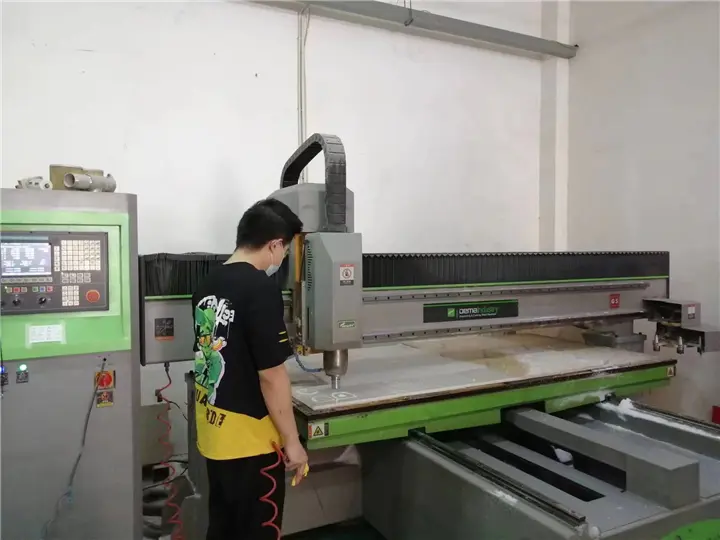
At Kexian, we exclusively utilize premium Cast Acrylic Sheets (MMA) with built-in UV stabilizers. Cast acrylic is manufactured by casting liquid PMMA monomer between two high-precision glass plates. This structural polymerization creates a cross-linked macromolecular matrix that delivers superior chemical resistance, higher optical transmittance, and excellent machining properties for CNC routing. This ensures that the letters do not yellow or warp under extreme UV indexes (Delta E color drift < 2 over 5 years).
3. Optical Diffusion Physics & High-Density LED Integration
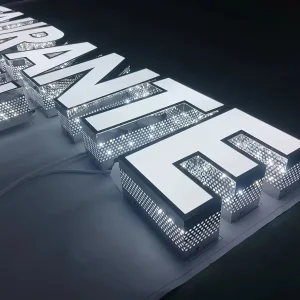
A common failure in cheap illuminated letters is the "hot-spotting" effect—where individual LED nodes are visible as bright dots through the acrylic surface, causing uneven luminance. Preventing this requires careful consideration of three critical design factors:
- Light Emitting Diode (LED) Pitch: Placing LED modules at tight, uniform intervals to create a seamless light sheet.
- Acrylic Diffusing Additives: Incorporating specialized titanium dioxide (TiO2) particles within the PMMA matrix to scatter light uniformly without causing significant transmission loss.
- Focal Distance: Ensuring the cavity depth between the LED source and the front of the acrylic face complies with calculated optical limits (typically a minimum of 30mm to 50mm, depending on LED viewing angle).
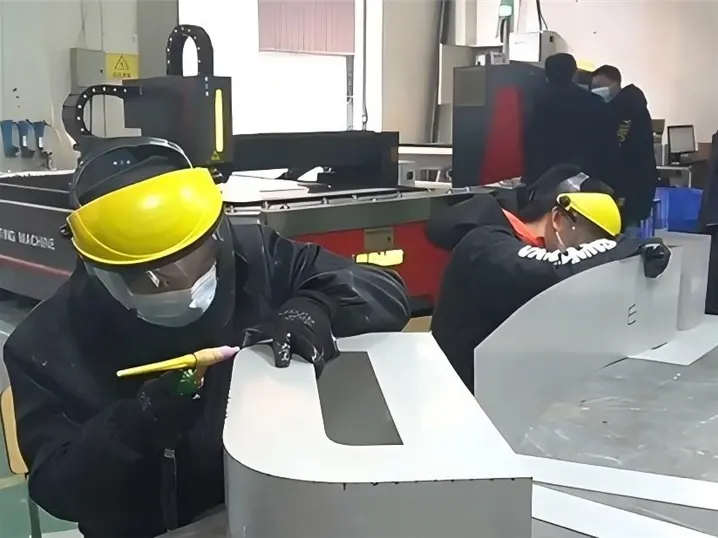
For ultra-thin letters (Mini-Acrylic Letters), we employ a solid cast block that is back-routed, painted, and filled with optical-grade polyurethane resin. This encapsulates the LED board entirely, providing a 100% waterproof barrier while maintaining uniform illumination.
4. Global Standards & Compliance Certification (E-E-A-T Paradigm)
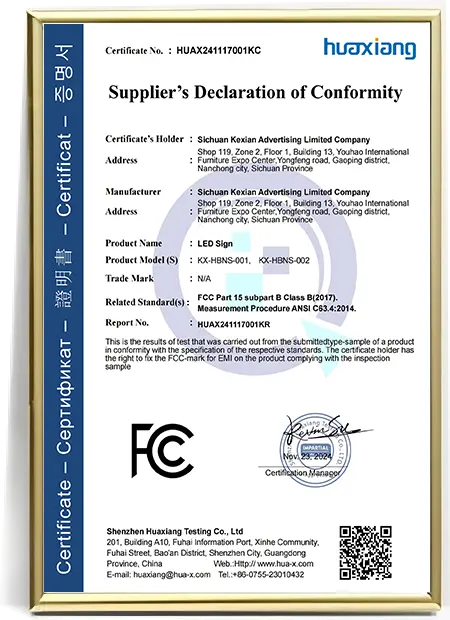
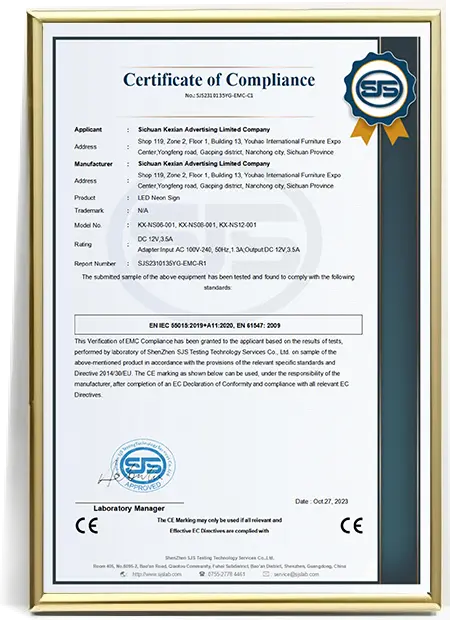
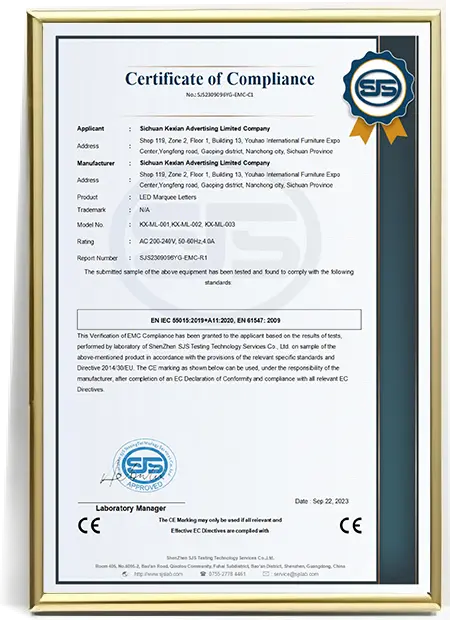
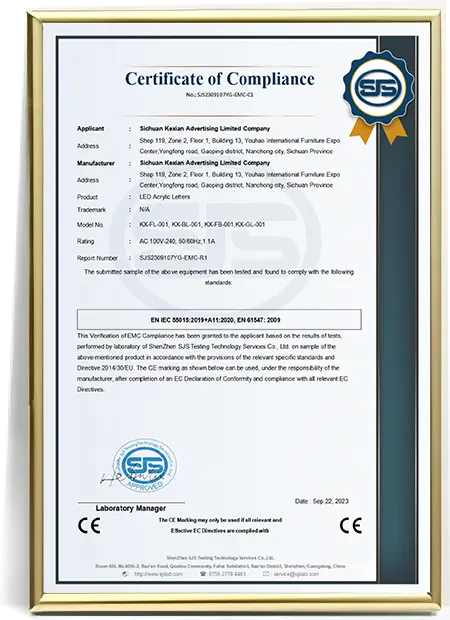
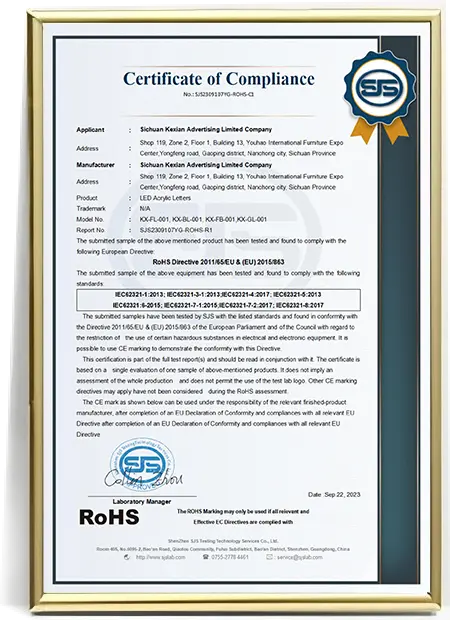
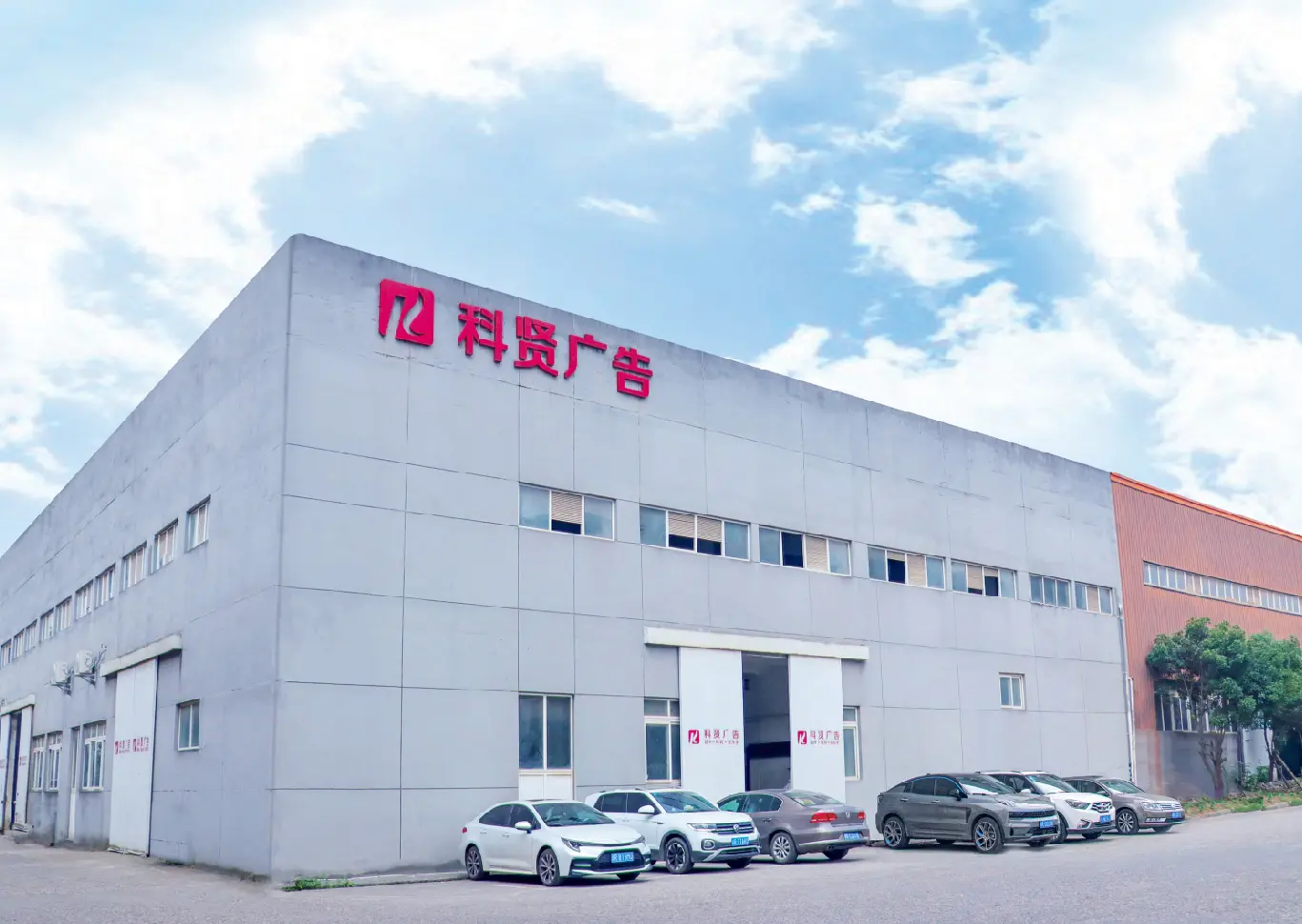
For institutional and enterprise buyers, compliance is a legal necessity. Signage must meet regional building codes, electrical requirements, and safety regulations before installation. Sichuan Kexian holds a comprehensive array of international testing certifications:
- CE (Conformité Européenne): Ensures all low-voltage power supplies, internal wiring, and LED engines comply with EU Safety, Health, and Environmental protection standards.
- UL (Underwriters Laboratories) Listing: Demonstrates compliance with strict fire safety, thermal performance, and electrical shock hazard guidelines in North America.
- RoHS & FCC: Certifies that our fabrication processes exclude dangerous heavy metals (Lead, Cadmium, Hexavalent Chromium) and maintain electromagnetic emissions within acceptable Class B levels.